Network Topology Types

Courtesy : https://electricalacademia.com/computer/types-network-topologies-diagram/
Network topologies can be viewed as a “MAP” of the network. It shows how the nodes interconnect. The Institute of Electrical and Electronic Engineers (IEEE) sets the standards for computer network technology. There are five network topologies identified below: Bus, Token Ring, Star, Mesh, and Hybrid.
Bus Topology in Computer Network
Bus topology is one of the simplest forms of network architecture, where all devices are connected to a single communication line called the “bus” or backbone. The bus serves as a shared transmission medium, allowing devices to send and receive data sequentially. When a device transmits data, the signal propagates along the bus and is received by all connected devices. However, only the intended recipient processes the data, while others ignore it.
A terminator is attached to both ends of the bus to prevent signal reflection, which could cause data interference. Bus topology typically uses coaxial or fiber-optic cables for data transmission. Protocols like Carrier Sense Multiple Access with Collision Detection (CSMA/CD) are often used to manage data collisions.
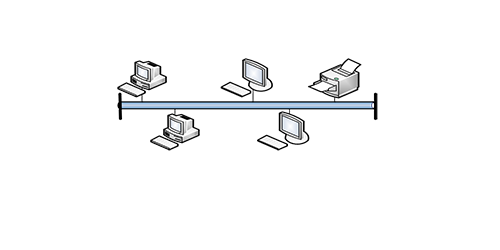
Figure 5 Bus Topology Diagram in Computer Network: Black lines indicate endpoints.
Token Ring Topology in Computer Network
Token ring topology organizes network devices in a logical circular structure, where data flows unidirectionally between them. A special data packet called a “token” circulates through the ring. A device must acquire the token to transmit data, ensuring orderly communication and preventing data collisions.
Each device in the ring acts as a repeater, regenerating and passing the token and data to the next device. The logical circular connection can be implemented physically in a ring or using centralized hardware like a Multi-Station Access Unit (MSAU).
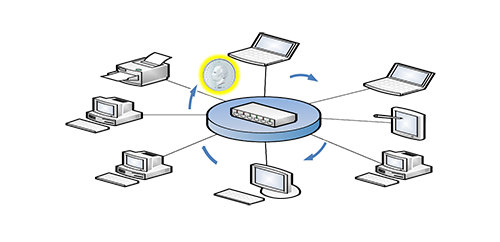
Figure 6 Token Ring Topology Diagram in Computer Network
Star Topology in Computer Network
In star topology, all devices are connected to a central hub, switch, or router using dedicated communication lines. The central hub acts as the mediator, receiving data from one device and forwarding it to the intended recipient. Devices in this topology do not communicate directly, ensuring structured data transfer.
The central device plays a crucial role in managing data traffic and isolating faults. Star topology is widely used in modern Local Area Networks (LANs) and wireless networks due to its efficiency and reliability.
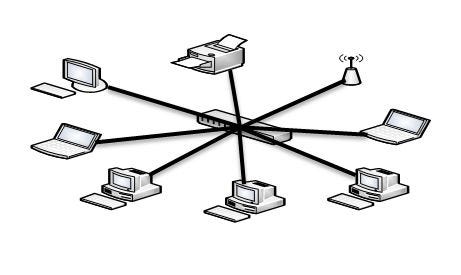
Figure 7 Star Topology Diagram in Computer Network
Mesh Topology in Computer Network
Mesh topology creates a network where devices (nodes) are interconnected, forming multiple communication paths. It can be categorized into:
Full Mesh: Every node is directly connected to all other nodes.
Partial Mesh: Some nodes are interconnected, while others are not directly linked.
This topology provides high redundancy and reliability. If one connection fails, data can take alternative routes to reach its destination. Mesh networks are common in mission-critical applications, such as military communication systems and financial infrastructures.
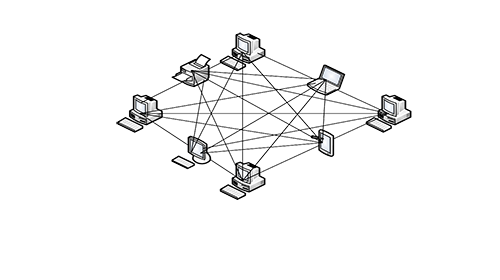
Figure 8-1 Mesh Topology Diagram in Computer Network
Hybrid Topology in Computer Network
Hybrid topology combines two or more topologies, leveraging their strengths to meet specific network requirements. For example, a hybrid network may integrate star and bus topologies, using a central hub to connect star-configured subnets to a bus backbone.
This topology is highly versatile and can be customized for various use cases, making it ideal for large, dynamic environments like corporate offices or university campuses.
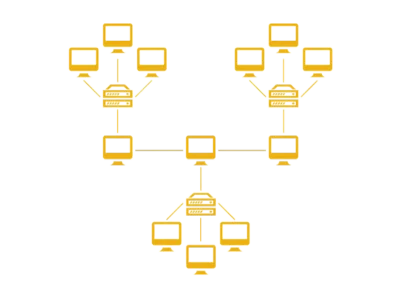
Figure 8-2 Hybrid Topology (Star-Bus topology) Diagram in Computer Network
Network Topology Advantages and Disadvantages
TopologyAdvantages DisadvantagesBus Topology– Cost-effective and easy to set up.– Difficult to troubleshoot.– Ideal for small networks.– Performance decreases with more devices.Token Ring– Prevents data collisions using token-based access.– Slower than other topologies in high-demand networks.– Deterministic performance.– Failure of one device can affect the entire network.Star Topology– Easy to add/remove devices.– Failure of the central hub disrupts communication.– Centralized management and fault isolation.– Requires more cabling compared to bus topology.Mesh Topology– High redundancy and fault tolerance.– Expensive due to extensive cabling.– Ideal for mission-critical systems.– Complex installation and maintenance.Hybrid Topology– Combines the strengths of multiple topologies.– Complex to design and manage.– Scalable and flexible.– Cost can increase depending on the design and components used.